Harwood Heights homes, many built between the 1950s and 1970s, often have 40- to 50-gallon tanks that suffer from mineral sediment accumulation drawn from Chicago-area water mains. During humid continental winters when groundwater stays colder longer, this sediment insulates heating elements and forces gas burners to cycle harder, shortening tank life. Technicians at Home Service Plumbing routinely open drain valves on units near Ridgeland Commons to flush compacted scale before it cracks glass-lined tanks or trips high-limit switches.
Gas control valves in these older installations frequently stick after years of exposure to the temperature swings between Harwood Heights summers and sub-zero January nights. A failed thermocouple or worn magnet can shut down the pilot without warning, leaving households without hot water on the weekend. Our crews carry factory-matched valves for common Bradford White and AO Smith models found in Norridge split-levels and test manifold pressure against the 4.0-inch water column spec required by local code before leaving the job.
Electric water heaters in multi-family buildings along North Newland Avenue sometimes develop simultaneous element failures when 240-volt circuits have aged aluminum wiring. We isolate each element with a clamp meter, replace only the failed components when the tank remains sound, and verify that the upper and lower thermostats track within five degrees of each other. This targeted approach prevents unnecessary full replacements while meeting the inspection standards enforced by the Cook County building department.
Technician insight
In Harwood Heights the thing that catches most people out with water heater repair is the mid-century homes along Newland and Lawrence where original tanks sit in tight closets with no expansion tank. When winter pressure spikes hit, the T&P valve weeps and homeowners assume the tank itself is shot, but often it is just the missing expansion control that the original plumber never added.
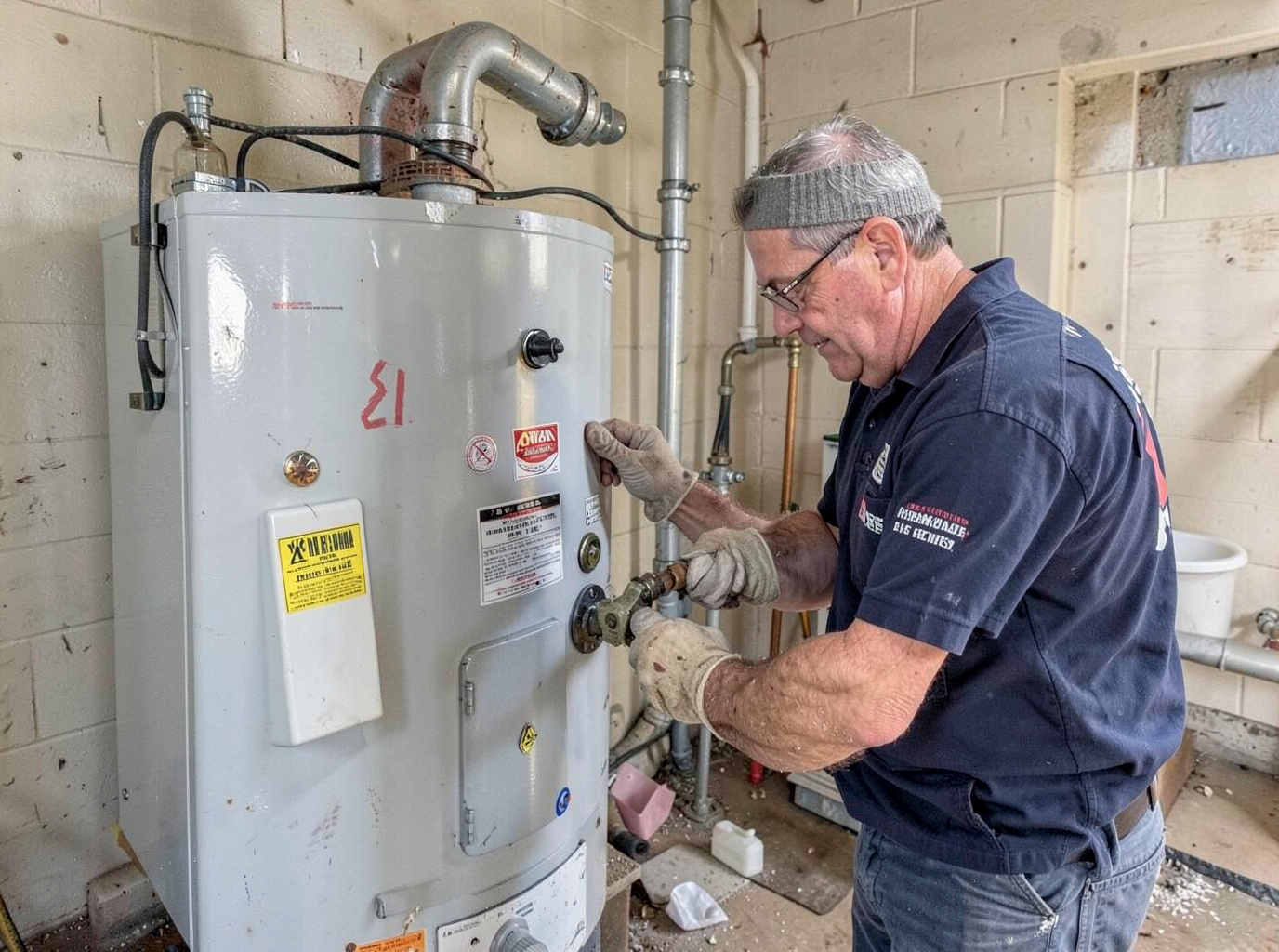
Sediment-clogged tank in a 1962 Norridge ranch
Homeowner reported lukewarm water and popping sounds after the first hard freeze. We found the dip tube broken and three inches of scale on the bottom. After flushing and installing a new dip tube and lower element, the 50-gallon unit recovered full temperature within 45 minutes and has run without issues through the following winter.
Water Heater Repair Services We Offer
✓Electric Element Repairs
Replace burned-out upper or lower heating elements and recalibrate thermostats on 240-volt units common in Harwood Heights multi-family buildings.
✓Gas Control Valve Repairs
Diagnose and replace sticking gas valves, thermocouples, and igniters on standard atmospheric water heaters found throughout Norridge and Harwood Heights.
✓Tank Flushing and Sediment Removal
Power-flush mineral buildup from older tanks to restore efficiency and reduce the risk of premature failure during cold Cook County winters.
✓Thermostat and High-Limit Switch Replacement
Install new thermostats and safety switches that prevent scalding or overheating in homes near Harwood Heights Village Hall.
✓Pilot Light and Ignition Repairs
Restore reliable pilot operation on gas units affected by drafts in older Harwood Heights basements and crawl spaces.
Water Heater Repair Cost in Harwood Heights, IL
| Service | Typical Range | What Affects It |
|---|---|---|
| Electric element replacement | $225–$375 | Price rises if both elements and thermostats require replacement or wiring repairs are needed. |
| Gas valve replacement | $275–$450 | Higher end applies to units with difficult access or additional venting corrections. |
| Thermostat or high-limit switch | $150–$275 | Includes diagnostic time; multiple switches increase total. |
| Full tank flush and inspection | $125–$225 | Recommended annually for homes with hard water in the Norridge corridor. |
Ranges are typical for Harwood Heights, IL and confirmed with an exact written quote before any work starts.
How it works
- 1
Initial Inspection
Technician arrives at the Harwood Heights address, shuts off power or gas, and checks tank age, venting, and visible leaks.
- 2
Diagnostic Testing
Measure voltage on electric elements, gas pressure on valves, and temperature differential across the tank to isolate the failure.
- 3
Targeted Repair
Replace only the failed component—element, valve, or thermostat—while confirming the tank lining remains intact.
- 4
System Verification
Refill, purge air, test for leaks, and confirm the unit meets temperature and pressure settings before restoring service.
Pricing
Upfront quote provided after on-site inspection; parts and labor vary by unit condition and accessibility.