2026-08-19 · Mike Kowalski
Dealing with Sewer Odors After Heavy Storms in Cook County
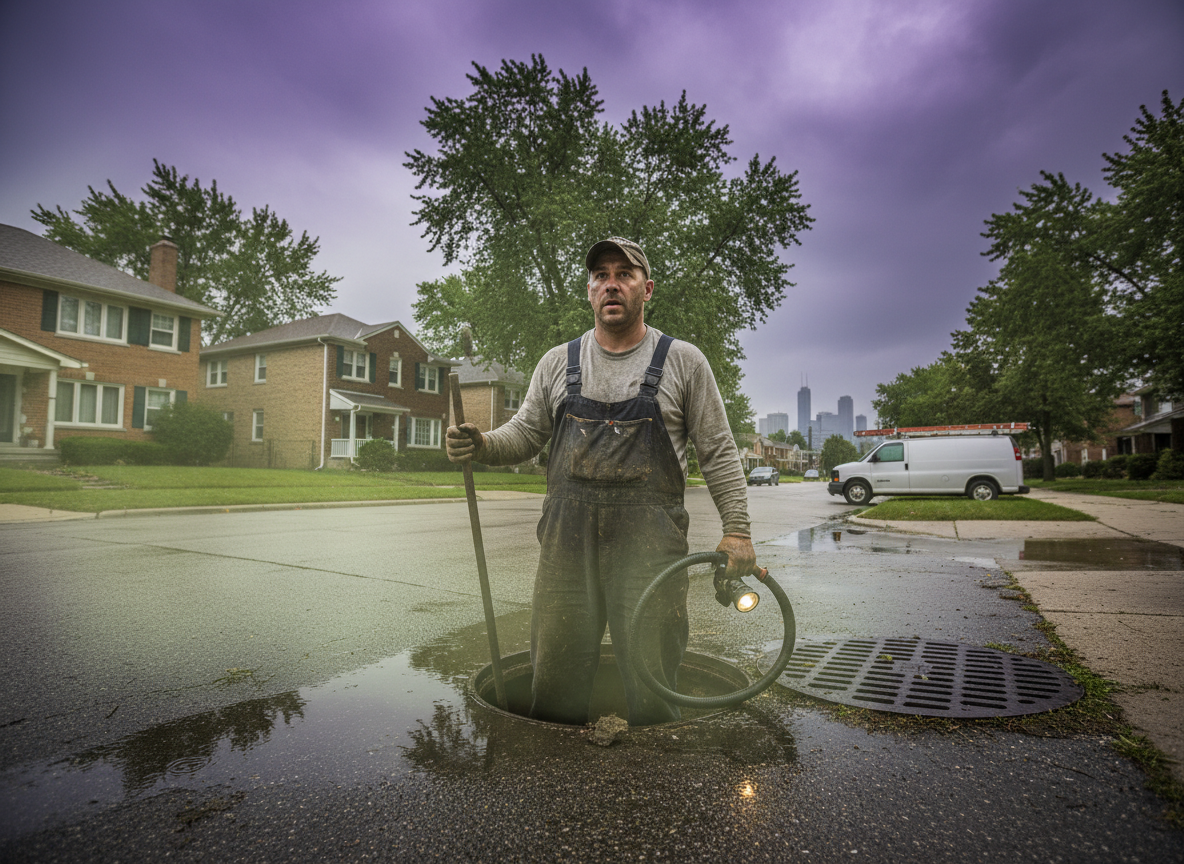
Heavy storms in Cook County push sewer gases into homes through dry P-traps or overwhelmed municipal lines, and the smell typically fades within 48 hours once water levels stabilize unless a backup has occurred in the main sewer.
Storm Impact on Local Sewer Systems
Cook County experiences humid continental weather with sudden heavy rains that overwhelm combined sewer systems in neighborhoods like Harwood Heights and Norridge. Older homes built before 1970 often have clay or cast-iron lines that shift with freeze-thaw cycles during cold winters, allowing infiltration. When rain saturates the ground, pressure forces gases back through floor drains and vents. Residents near Ridgeland Commons or Harwood Heights Village Hall report odors strongest in basements after downpours because those areas sit lower than Chicago streets to the south. Checking for gurgling toilets or slow drains right after rain reveals whether the issue stays localized or points to the main line shared with Park Ridge properties.
Checking Traps and Vents First
Start by pouring a gallon of water into every floor drain and fixture trap to restore the water seal that blocks gases. In Harwood Heights homes with laundry sinks or basement showers, these traps dry out faster during summer dry spells before storms hit. Run water in all sinks for two minutes while listening for air movement in the vent stack on the roof. If the odor returns within hours, the vent may be blocked by debris washed in during the storm. Homeowners in Norridge often find leaves or roof sealant in vents after high winds accompany summer rains. Avoid chemical drain cleaners at this stage because they can damage older pipes common in Cook County housing stock.
Addressing Backups in Main Lines
Persistent odors after 72 hours usually trace to partial blockages in the sewer lateral where storm water mixes with household waste. Roots from mature trees along Newland Avenue invade joints in 4-inch lines, and heavy rain washes soil that narrows the pipe further. A camera inspection reveals whether the issue sits inside the home or reaches the street connection. For homes near the airport corridor, shared mains see extra load from commercial runoff. Linking this to sewer line repair helps when excavation becomes necessary rather than simple snaking.
Prevention Steps for Future Storms
Install backflow preventers on floor drains in basements prone to flooding during spring and fall rains. Schedule annual vent cleaning before winter freeze sets in, since ice can trap gases that then escape after the first thaw. Keep gutters clear so downspouts do not direct water toward foundation walls where it enters sewer cleanouts. Residents in Harwood Heights who add a 1/4-inch slope to exterior grading reduce infiltration points around the 4338 North Newland address area. These steps cut recurrence without requiring full system replacement in most pre-1980 homes.
Knowing When Professional Help Is Needed
If odors linger past three days or multiple fixtures back up simultaneously, contact a plumber for camera work and possible hydro-jetting. Emergency Plumbing Service covers after-hours calls when storms hit on weekends. For recurring issues tied to the main line, review options under sewer line repair before odors affect indoor air quality near schools or the village hall. Related reading on camera inspections near the airport helps Norridge homeowners decide timing. Local service runs Mon–Fri 8am–6pm and Sat 9am–2pm from the Harwood Heights base.