
2026-08-19 · Mike Novak
Inspecting Outdoor Faucets Before Winter in Harwood Heights
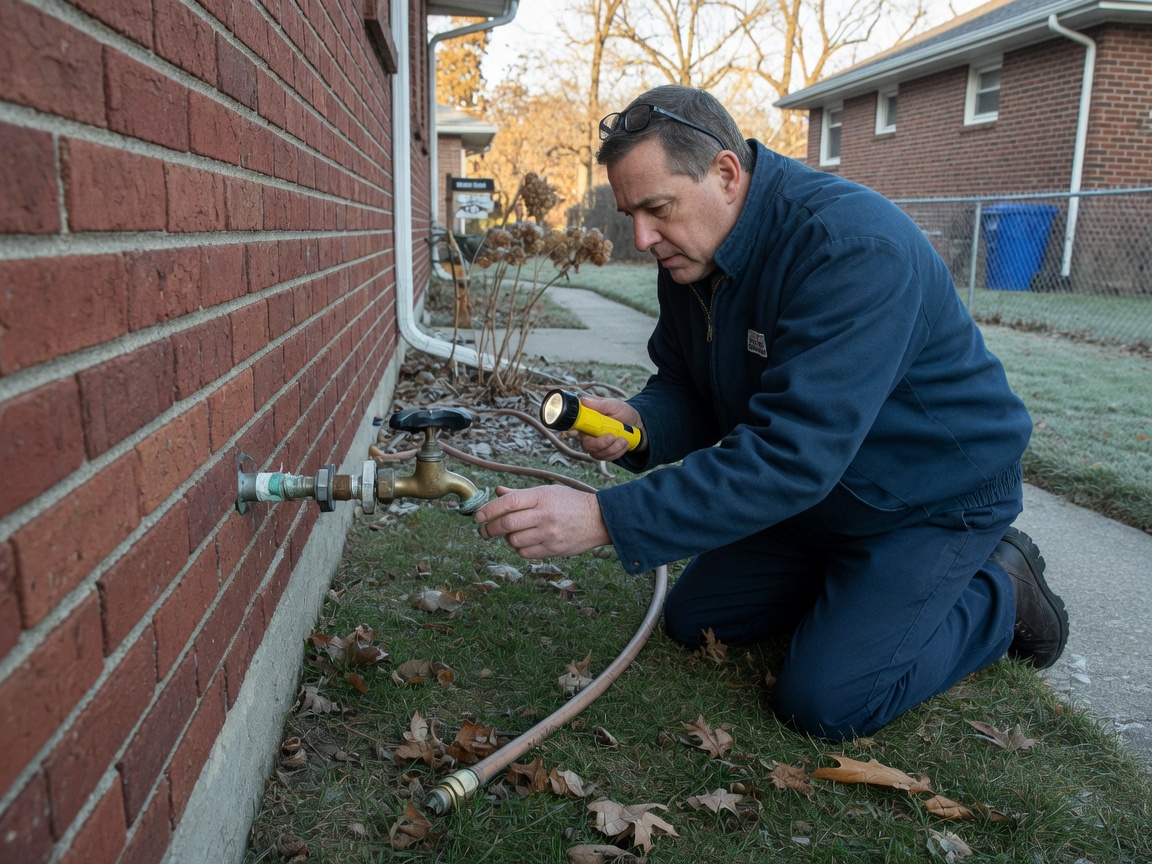
Inspecting outdoor faucets before winter in Harwood Heights starts with checking for leaks, cracks, and proper shutoff function on every exterior spigot. Homes in this part of Cook County often have older galvanized or copper lines that contract sharply once temperatures fall below freezing, so catching issues early avoids indoor flooding when pipes split. Focus first on the main shutoff valve inside the home, then test each faucet for steady drip or seepage around the packing nut.
Why Outdoor Faucet Checks Matter in Harwood Heights Winters
Harwood Heights sits in a humid continental climate where January lows routinely reach single digits, and the ground freezes several inches deep around foundations near Ridgeland Commons and the Village Hall. Older ranch and two-story homes built in the 1950s and 1960s along North Newland and nearby streets commonly have exterior faucets installed without modern frost-proof stems. When water remains inside the valve body, expansion during a hard freeze cracks the brass or copper, sending water into basements or crawl spaces once the thaw arrives. Regular pre-winter inspection catches these weak points before they become emergency calls to plumbers serving Norridge and Park Ridge.
Step-by-Step Inspection for Harwood Heights Homes
Begin at the interior shutoff valve for each outdoor faucet and turn it clockwise until it stops, then open the exterior spigot to drain the line completely. Look for corrosion on the valve handle, loose packing nuts, and any visible cracks along the spout or sill cock body. Test the vacuum breaker or backflow preventer if one is present by pressing the test lever; it should spring back without sticking. Walk the perimeter of the property and check for low spots where melting snow pools against the foundation, since standing water near the faucet increases freeze risk on the supply pipe. Repeat the process on every exterior location, including garage-side and rear-yard spigots common on Harwood Heights lots.
Protecting Faucets After Inspection
Once lines are drained, install insulated faucet covers rated for at least -20°F on every exterior spigot, especially those facing north or west where wind chill hits hardest near Chicago’s northwest border. Avoid leaving garden hoses attached, because trapped water freezes first and backs pressure into the valve. If an older faucet shows signs of seepage after shutoff, schedule faucet repair in Harwood Heights before the first hard freeze rather than waiting for a burst. In homes with finished basements, consider adding pipe insulation sleeves along any exposed supply lines running near exterior walls.
When Further Pipe Work Becomes Necessary
Persistent leaks after the shutoff valve is closed usually indicate wear inside the stem or seat that simple tightening will not fix. In these cases, pipe repair services become the next step to replace the entire sill cock assembly with a frost-free model designed for Illinois winters. Homeowners near Norridge often discover that original 1960s installations used soldered joints now weakened by decades of thermal cycling. A professional inspection can confirm whether the supply line itself needs rerouting or sleeving before another season of expansion and contraction begins.