
2026-08-19 · Mike Novak
Cost Guide for Water Heater Replacement in Harwood Heights
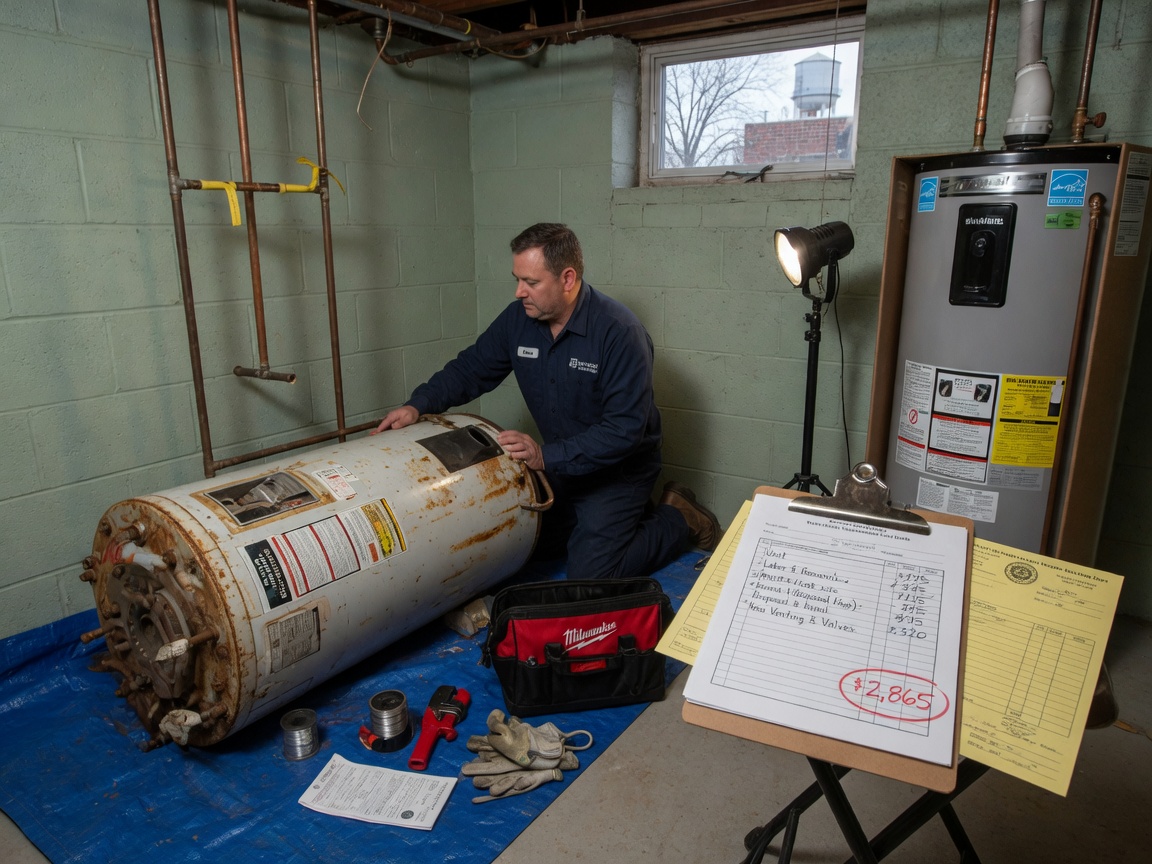
Water heater replacement in Harwood Heights typically costs $1,200 to $2,800 for a standard 40- to 50-gallon unit installed. Prices vary with tank style, fuel type and any required venting or electrical upgrades common in Cook County homes.
Understanding Local Cost Ranges
Homes in Harwood Heights and nearby Norridge often date to the 1950s through 1970s, so many still rely on 40-gallon or 50-gallon tanks that fit tight utility rooms. In the humid continental climate, cold winters increase hot-water demand while hot summers add sediment buildup from municipal supply lines. These conditions shorten average tank life to roughly 8 to 12 years. A basic natural-gas replacement runs $1,200 to $1,800, while electric models with new wiring can reach $2,000 to $2,800. Larger 75-gallon units needed for multi-bath households push totals above $2,500 when permits and haul-away fees are included. Homeowners near Harwood Heights Village Hall or Ridgeland Commons frequently face the same price brackets because the housing stock shares similar pipe layouts and basement access points.
Factors That Shift Replacement Prices
Several site-specific items change the final invoice. Older galvanized supply lines common in Harwood Heights require extra fittings or partial repiping. Units installed in finished basements may need drywall repair after removal. Switching from a standard vent to a power-vent model adds $300 to $600 when the chimney chase is blocked by additions. Hard-water minerals accelerate scale on heating elements, so some replacements include a new expansion tank or shut-off valve. Labor for a two-person crew usually accounts for 35 to 45 percent of the total. Scheduling outside normal business hours can add an after-hours surcharge, though weekday daytime work keeps costs at the lower end of the range.
Matching the Right Unit to Local Conditions
Choosing between tank and tankless depends on household size and peak demand. Families in Norridge with three or more bathrooms often select 50-gallon high-recovery gas models to handle simultaneous showers during winter mornings. Tankless units save space but require larger gas lines and dedicated venting, raising installed cost by $800 to $1,200. Electric heat-pump models qualify for local utility rebates yet need 240-volt circuits that many 1960s homes lack. Checking the existing venting path and water pressure before purchase prevents change orders. Water heater repair remains an option when the tank is less than seven years old and only the thermostat or element has failed.
Typical Replacement Steps and Timeline
A standard job begins with shutting off water and gas or power at the meter. The old tank is drained, disconnected and removed through the basement door or garage. New seismic strapping and a drip pan are installed on the concrete pad. Connections are made with dielectric unions to protect against corrosion from Chicago-area water chemistry. The new unit is filled, purged of air and tested for leaks before the space is cleaned. Most replacements in single-family homes finish in four to six hours. Homeowners who also notice fixture staining may want to review handling hard water stains on fixtures in Harwood Heights for long-term maintenance tips after the new heater is running.
When Repair Costs Signal Replacement
If repair estimates exceed 50 percent of a new unit price, replacement usually makes sense. Repeated element failures or visible rust at the tank seam indicate internal corrosion accelerated by winter temperature swings. Homes near Norridge that have experienced sewer backups sometimes discover sediment has damaged the dip tube, making continued repair uneconomical. Leak detection can confirm whether moisture around the tank base comes from the heater or an upstream fitting. Keeping records of prior service dates helps decide between another repair visit and a full swap before an unexpected failure during peak winter use.