2026-08-19 · Mike Novak
Preparing Your Plumbing for a Harwood Heights Summer Vacation
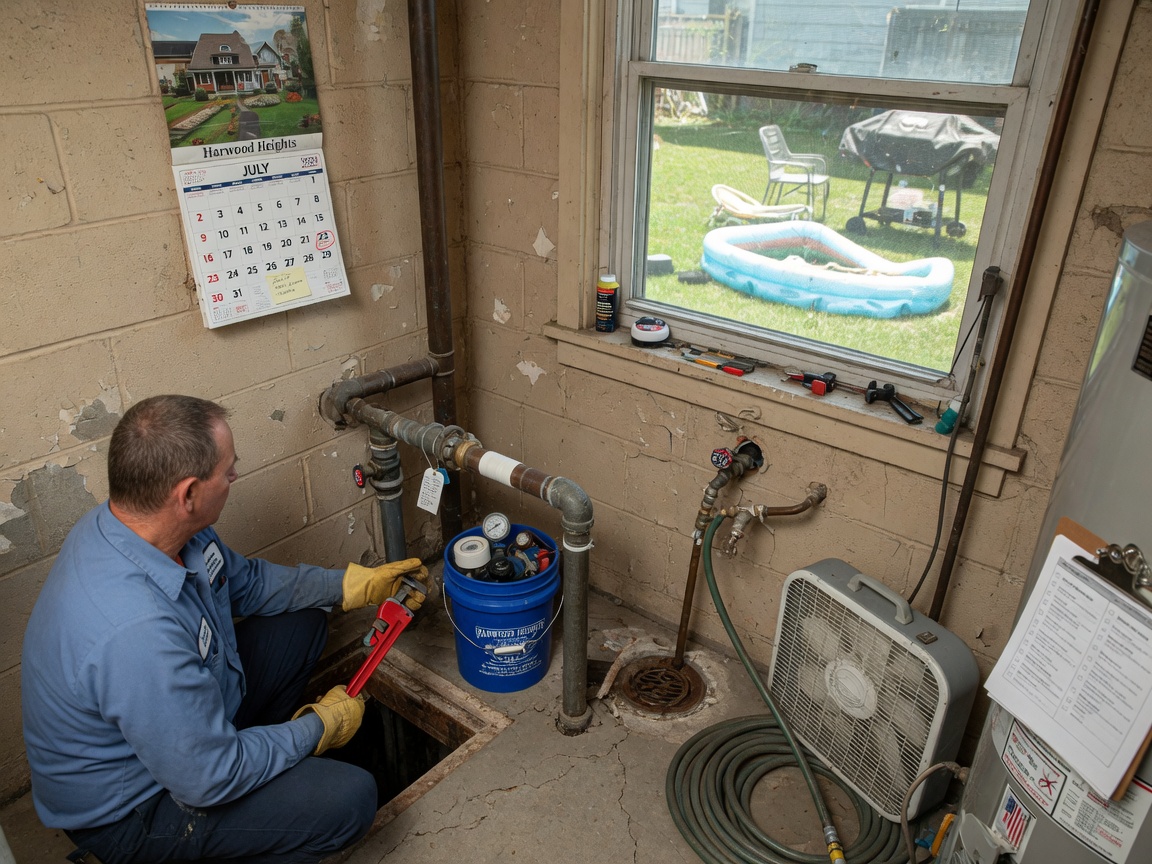
Before leaving your Harwood Heights home for summer vacation, shut off the main water valve after testing all fixtures to prevent leaks during hot, humid weather. Homes in this Cook County neighborhood and nearby Norridge often feature mid-century construction with galvanized or copper lines that expand under summer heat, raising the chance of small drips turning into issues while you are away. A quick walkthrough catches problems early, especially around older joints near Harwood Heights Village Hall or Ridgeland Commons where soil movement from heavy rains can stress underground connections.
Inspecting Visible Fixtures and Connections
Walk through every room and check sinks, tubs, and toilets for drips or moisture around supply lines. In Harwood Heights homes built decades ago, rubber washers and compression fittings often harden from repeated freeze-thaw cycles even though summer heat now dominates. Run each fixture for two minutes while watching the shutoff valves and P-traps underneath. Note any slow seepage that could worsen with no one present to notice. If you spot corrosion on a supply line near the floor, mark it for later attention rather than attempting repairs right before travel. This step takes less than an hour yet directly addresses the most common source of vacation water damage in Cook County bungalows and ranches.
Shutting Off Water and Draining Lines
Locate the main shutoff, usually in the basement or near the water meter, and close it after confirming no one needs running water overnight. Open all faucets on upper floors first to release pressure, then drain the lowest points including outdoor spigots that serve Harwood Heights yards. Summer storms in this humid continental climate can push water back through vents if lines remain pressurized. Leave one cold-water tap slightly open on the main floor as a pressure release. Residents in adjacent Norridge follow the same sequence because shared water mains experience the same pressure spikes during July thunderstorms. Keep a bucket ready to catch residual water that may still drip after the valve is closed.
Protecting the Water Heater and Appliances
Turn the water heater to vacation or pilot mode if it is gas, or lower the electric thermostat to 50 degrees to reduce energy use and scale buildup during extended absence. In older Harwood Heights properties, sediment from Chicago-supplied water collects faster in summer heat and can overheat elements when no cold water flows through. Disconnect the washing machine hoses and place a shallow pan beneath the connections to catch any remaining drips. These steps protect both the appliance and the home from leaks that might otherwise go undetected for weeks. Check the area around the heater for existing moisture before you leave, because summer humidity can mask slow seepage from aging tank fittings.
Scheduling a Final Leak Check
If any fixtures showed prior issues, arrange a targeted inspection focused on supply lines and joints before departure. Homes near Norridge share similar pipe layouts that benefit from early detection of slab leaks common in Cook County foundations. A focused review catches problems that simple visual checks might miss, especially around older sewer laterals affected by tree roots in the neighborhood. This preparation keeps your return free of surprises and maintains the integrity of the plumbing system through the hottest months.
Returning and Restoring Service
Upon arrival, close all faucets you left open, then slowly reopen the main valve while listening for unusual flow sounds. Run cold water at each fixture for several minutes to flush air and any loosened sediment. Check the water heater temperature setting and restore it gradually over the first day. These final steps confirm everything held during your absence and catch any minor issues before they become larger concerns in the ongoing summer heat.