
2026-08-19 · Mike Novak
Understanding Sump Pump Failure After Heavy Rain in Harwood Heights
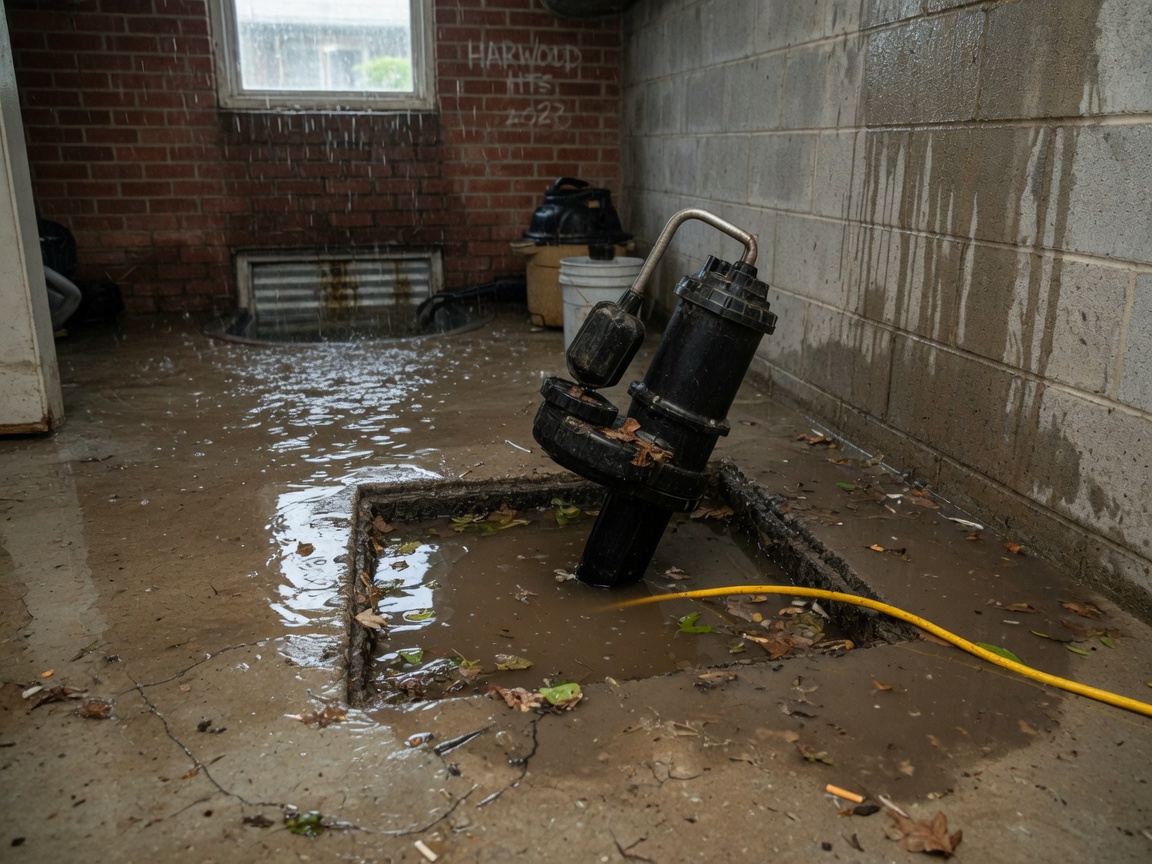
Sump pumps in Harwood Heights frequently fail after heavy rain because the combination of sudden water volume and cold-weather wear on older units overwhelms float switches and discharge lines before homeowners notice the problem.
How Local Climate and Housing Stock Trigger Failures
Harwood Heights sits in Cook County with a humid continental climate that brings intense summer downpours after long dry periods. These storms drop several inches of rain in hours, sending groundwater quickly into basements of post-war homes common in the neighborhood and nearby Norridge. Many houses here feature older concrete foundations and gravity drains that were never sized for modern rainfall intensity. The rapid rise in water table saturates clay-heavy soils around foundations, forcing sump pumps to cycle continuously. In winter, freeze-thaw cycles crack discharge pipes that run above ground to the street, so when spring rains arrive the pump runs but water backs up inside the pit. Homeowners near Harwood Heights Village Hall and Ridgeland Commons report the same pattern each season because the housing stock shares similar age and construction details.
Typical Failure Points in Harwood Heights Basements
Float switches stick from mineral buildup carried in by repeated cycles during wet periods. Check valves fail when debris from Chicago-area storm runoff lodges inside the mechanism. Motors burn out after running longer than designed because discharge lines clogged by leaves or ice cannot keep up. In homes near Park Ridge, power outages during thunderstorms leave pumps without backup, allowing water to rise even if the unit itself is functional. Discharge lines that exit near sidewalks often freeze in cold snaps, creating pressure that damages the pump seal. These issues appear most often in houses built before updated drainage standards, where original 1/3-horsepower units now handle water volumes they were never meant to manage.
Maintenance Steps That Reduce Post-Rain Failures
Test the pump monthly by pouring water into the pit until the unit activates. Clear the intake screen of sediment every spring before heavy rain season begins. Inspect the discharge line for kinks or ice blockages after each winter. Replace the check valve every 3–5 years because it prevents water from flowing back into the pit and causing short cycling. Homeowners can also install a battery backup unit rated for at least 8–12 hours of runtime to cover outages common during Cook County storms. Sump pump installation becomes necessary when an existing unit shows repeated short cycling or visible corrosion on the motor housing.
When Replacement Makes Sense After Repeated Failures
An 8–12 year old pump that fails after every major rain event usually needs replacement rather than another repair. Newer models with 1/2-horsepower motors and wider discharge ports handle the volume spikes seen in Harwood Heights better than older units. Consider upgrading the pit size if the current basin holds less than 18 gallons, as larger volumes reduce cycling frequency. Pairing the new pump with a water-powered backup or generator connection prevents issues during extended outages. Fixing low water pressure in older Harwood Heights houses often reveals related drainage problems that affect sump performance, so addressing both at once prevents future callbacks.