
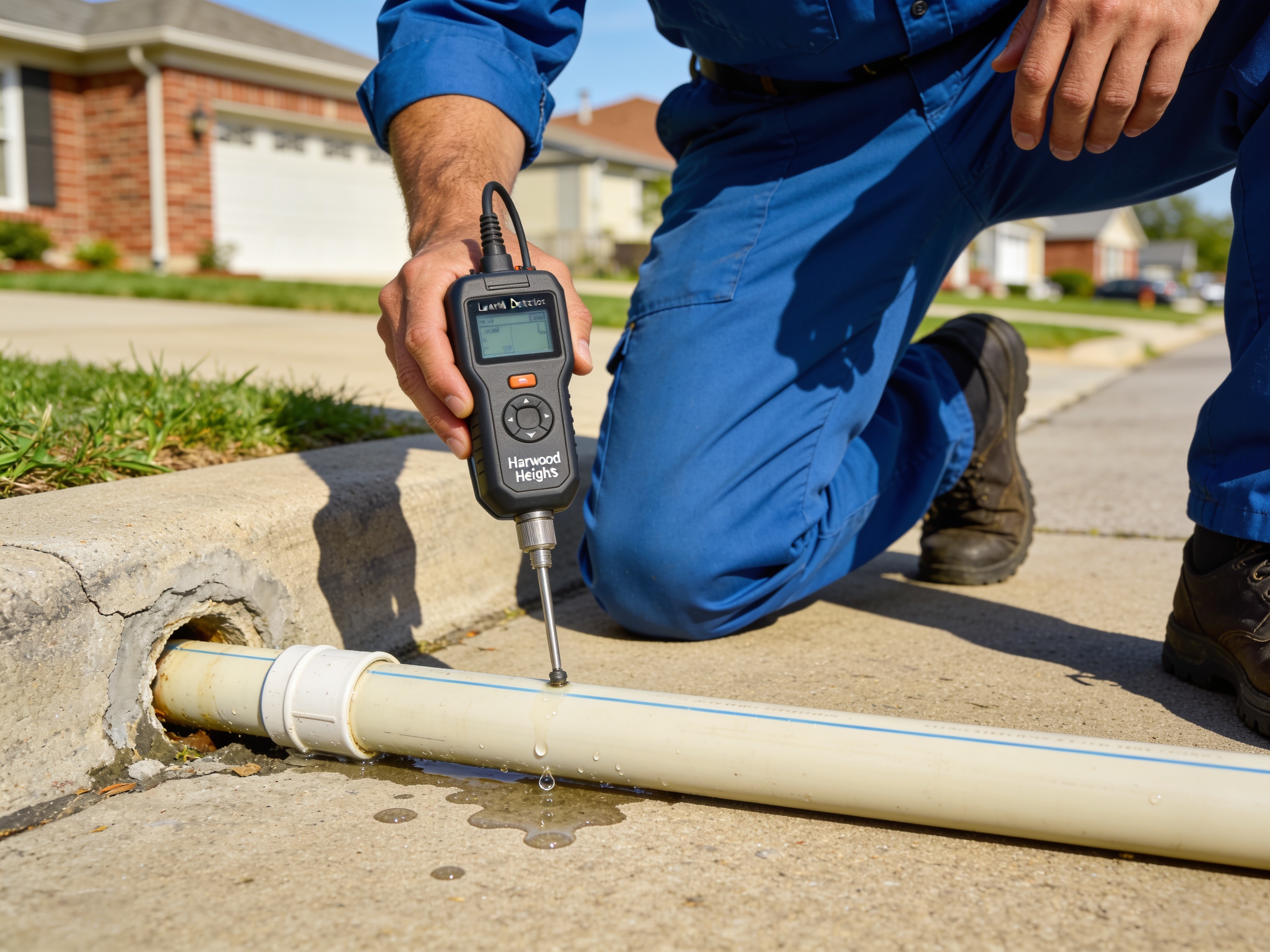
Harwood Heights homes built from the 1950s through the 1970s often contain galvanized steel or copper supply lines that corrode at joints after decades of exposure to the area's hard water. During cold winters when temperatures drop below freezing, these lines can develop pinhole leaks inside walls or under slabs near Ridgeland Commons and Harwood Heights Village Hall. Electronic listening equipment and camera inspection let us trace the leak path without tearing out drywall or concrete across the full length of the run.
Norridge and adjacent Chicago blocks share the same clay-heavy soil that shifts with seasonal freeze-thaw cycles, stressing buried water lines and sewer laterals. We start every job by isolating the meter and pressure-testing sections rather than guessing from surface stains. This method prevents unnecessary excavation in tight backyards common to the neighborhood's ranch and two-story stock.
Code requirements in Cook County call for proper backflow prevention when pressure testing, and we document every step for homeowners who may need records for insurance claims after a slab leak. Moisture meters and thermal imaging help confirm active leaks versus past staining, especially useful in humid summers when condensation can mimic water damage on basement walls.
Technician insight
In Harwood Heights the thing that catches most people out with Leak Detection is the number of 1960s homes still on original galvanized lines that leak at the threads under the slab once the ground freezes and thaws. Homeowners often chase ceiling stains for weeks before realizing the water is traveling from a joint two rooms away.
Slab Leak Near Village Hall
A homeowner in a 1962 ranch noticed steadily rising water bills and damp carpet edges. We isolated the cold line, ran acoustic sensors, and found a pinhole leak under the laundry slab. We excavated a two-foot section, replaced the corroded galvanized fitting with copper, and restored the floor without disturbing the rest of the home.
Leak Detection Services We Offer
✓Slab Leak Detection
Locates leaks under concrete slabs common in Harwood Heights ranch homes using acoustic sensors and thermal imaging to avoid full floor removal.
✓Water Line Leak Detection
Traces leaks on supply lines from the street to the meter and inside the home, critical after winter freezes in Cook County neighborhoods.
✓Sewer Line Leak Detection
Camera and smoke testing identifies cracks or offsets in older clay sewer lines serving homes near Norridge and Park Ridge.
✓Hidden Pipe Leak Detection
Finds leaks behind walls and ceilings in two-story homes without random demolition using moisture mapping and listening equipment.
✓Toilet and Fixture Leak Detection
Pressure tests and dye checks isolate leaks at toilets, tubs, and shutoff valves that waste water year-round in local households.
Leak Detection Cost in Harwood Heights, IL
| Service | Typical Range | What Affects It |
|---|---|---|
| Basic Pressure Test and Meter Check | $150–$250 | Single-story homes with accessible shutoffs |
| Full Electronic Leak Scan | $300–$500 | Includes slab or wall access in older galvanized systems |
| Sewer Camera Inspection Add-On | $200–$350 | When supply line test points to drainage issues |
| Emergency After-Hours Detection | $400–$700 | Available outside Mon–Fri 8am–6pm and Sat 9am–2pm |
Ranges are typical for Harwood Heights, IL and confirmed with an exact written quote before any work starts.
How it works
- 1
Initial Assessment
Review water bill history and visible signs, then isolate the main shutoff at the meter located at 4338 North Newland service area homes.
- 2
Section Isolation
Test individual zones with pressure gauges to narrow the leak to a specific run of pipe or fixture group.
- 3
Electronic Location
Use acoustic sensors and camera inspection to pinpoint the exact leak point under slabs or inside walls.
- 4
Documentation and Repair Plan
Provide photos, location map, and recommended repair approach that meets Cook County requirements.
Pricing
Most leak detection calls in Harwood Heights fall between $250 and $650 depending on access and number of zones tested.