
2026-08-19 · Mike Novak
Checking for Hidden Leaks Under Harwood Heights Kitchen Sinks
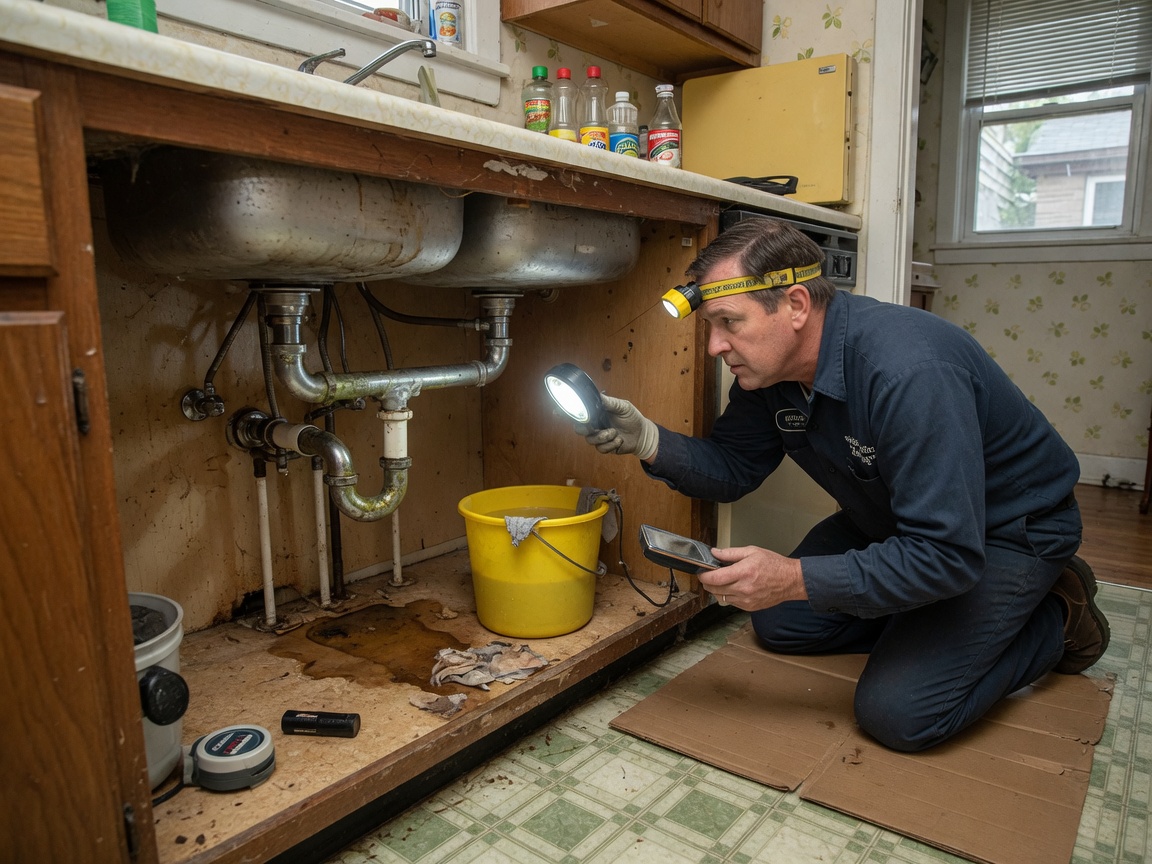
To check for hidden leaks under kitchen sinks in Harwood Heights homes, start by running the faucet for five minutes while feeling the underside of the cabinet and P-trap connections for moisture. Older houses in this Cook County neighborhood commonly feature galvanized steel or early copper supply lines that corrode at joints after years of exposure to the area's humid continental climate.
Visible Signs During Routine Use
Look for water stains on the cabinet floor or warped particleboard near the sink base, which appear frequently in Harwood Heights kitchens built before 1970. Condensation on cold pipes during humid summers can mimic a leak, but actual seepage leaves mineral deposits or dark rings that persist after wiping. In winter, temperature swings from below-freezing nights to indoor heat cause pipes to expand and contract, loosening compression fittings over time. Residents near Ridgeland Commons report noticing these signs more often in two-story homes where the kitchen sits above a finished basement.
Check the shut-off valves under the sink by turning them off and on; any seepage at the packing nut indicates worn seals common in Park Ridge-adjacent properties. Soap scum or mildew buildup along the back wall of the cabinet often signals a slow drip from the garbage disposal connection that stays hidden until the wood softens.
Step-by-Step Inspection Process
Turn off the water at the angle stops, place a dry towel beneath the trap, and loosen the slip nuts one at a time to inspect the rubber washers for cracks. Shine a flashlight along the supply lines where they enter the wall, looking for green corrosion on copper or flaking rust on galvanized sections that are standard in Norridge and Harwood Heights housing stock. Run the dishwasher if connected and listen for hissing sounds that point to a failing inlet valve.
Reassemble and restore water pressure, then monitor the area for 30 minutes without use to confirm whether any new moisture appears. These steps reveal leaks before they reach the subfloor and affect neighboring units in multi-family buildings common near Harwood Heights Village Hall.
Local Climate and Pipe Stress Factors
Harwood Heights experiences wide temperature swings that stress under-sink plumbing more than in milder regions. Cold winters cause soil shifting around the foundation, which can pull on drain lines exiting the house and create hairline cracks at the trap arm. Hot, humid summers increase indoor moisture levels, accelerating corrosion on exposed metal fittings that sit unused for months in vacation homes.
Homes near Chicago's northwest border often retain original 1960s plumbing that was never updated during kitchen remodels, making the P-trap and dishwasher drain hose the first points to fail. Checking these connections twice a year prevents small leaks from turning into larger pipe repair jobs.
For deeper evaluation of recurring moisture, schedule professional leak detection that uses acoustic tools suited to the dense plaster walls found in local older houses. Homeowners dealing with low pressure alongside sink leaks may also review fixing low water pressure in older Harwood Heights houses to address shared supply issues. When supply lines need replacement, pipe repair crews familiar with Cook County permitting can swap sections without disturbing finished surfaces.