2026-08-19 · Mike Novak
Harwood Heights Guide to Toilet Running Water and Wasted Bills
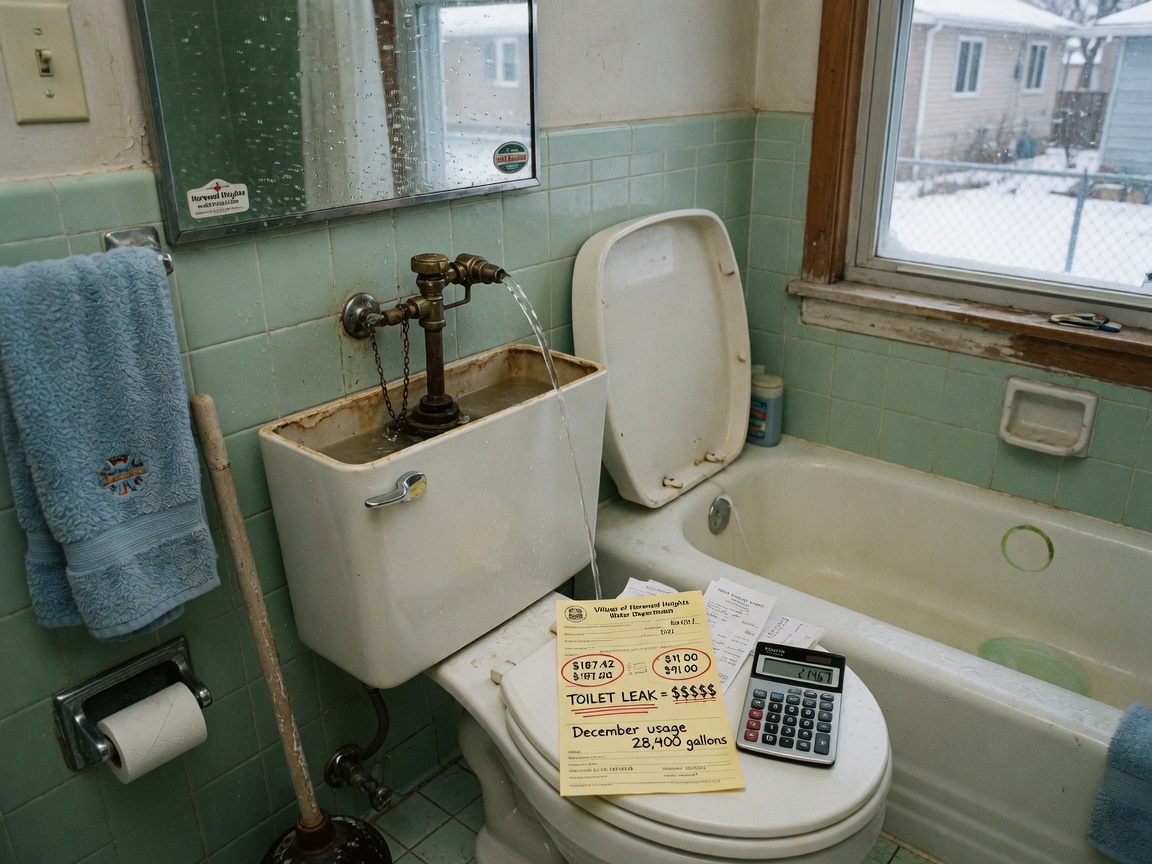
A running toilet in a Harwood Heights home can waste 200 gallons or more per day, adding $30–$90 to monthly water bills depending on rates from the local utility. Older homes built before 1970 in Cook County often have fill valves and flappers that wear faster due to mineral buildup in the water supply.
Common Causes in Harwood Heights Housing Stock
Harwood Heights and nearby Norridge feature many two-story brick homes from the 1950s and 1960s with original plumbing that now shows age. The humid continental climate brings cold winters that can cause minor pipe contraction, loosening connections around the tank. Hard water common in this part of Cook County leaves scale on the flapper seat, preventing a tight seal and allowing water to leak into the bowl continuously. Homeowners near Ridgeland Commons often report the issue after noticing higher bills during summer when irrigation use already increases overall consumption.
The Village Hall area has similar post-war construction where chain-linked flappers degrade after 8–12 years. Chicago’s older municipal water lines feeding into these neighborhoods carry higher sediment loads that accelerate wear on rubber components inside the tank.
Checking for the Problem Yourself
Start by removing the tank lid and adding a few drops of food coloring to the water. Wait 15 minutes without flushing; color appearing in the bowl confirms a leak past the flapper. Listen for the fill valve cycling every few minutes even when no one has used the fixture. In homes along Newland Avenue, check the overflow tube height because settling foundations can tilt the tank slightly and raise water levels.
Test the flapper by pressing it down gently with a finger. If the hissing stops, replacement is needed. These steps work well in the typical 1,200–1,800 square foot homes found throughout the area.
Impact on Monthly Bills and Water Use
A toilet that runs nonstop can push usage from the normal 3,000 gallons per month for a household of four up to 9,000 gallons or higher. At current Harwood Heights rates, that extra volume adds noticeable cost during winter when indoor water use already rises. Properties near Park Ridge share the same supply and report similar spikes when multiple toilets develop the same issue.
Fixing the problem early prevents escalation to the fill valve or supply line, which can double the waste if left unchecked.
When Professional Toilet Repair Makes Sense
If the flapper and valve replacement does not stop the running after two attempts, the flush valve seat may be worn and require a full toilet repair service. Plumbers familiar with Harwood Heights stock often carry parts sized for the narrower tanks common in these older homes. Persistent issues can also point to supply line corrosion that a leak detection visit can confirm without unnecessary wall opening.