2026-08-19 · Mike Kowalski
What Causes Low Water Pressure in Homes Near O'Hare
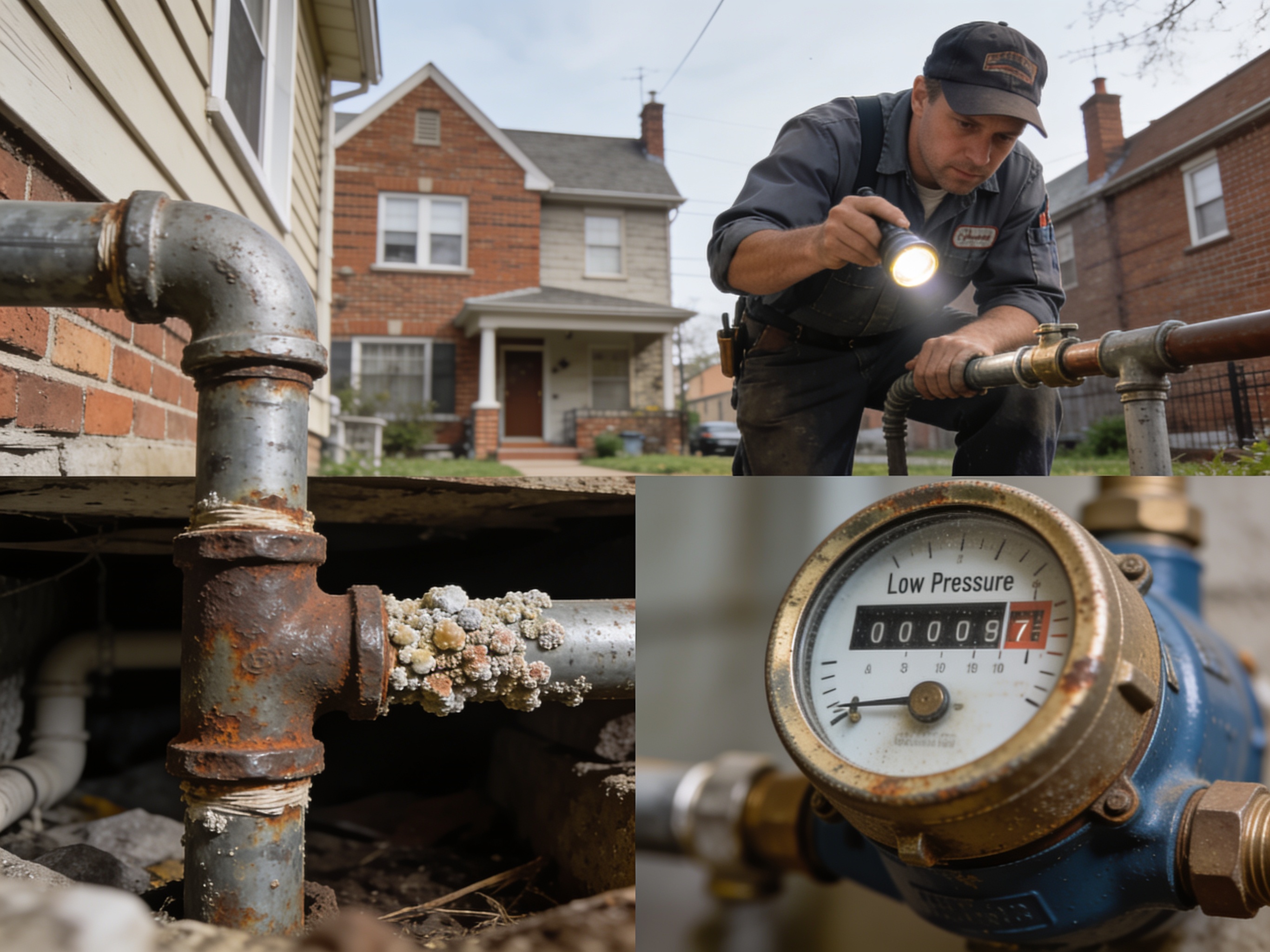
Low water pressure in homes near O'Hare typically traces to corroded galvanized steel pipes installed before 1970 in Harwood Heights and Norridge neighborhoods. These lines narrow over decades from mineral buildup and rust common in Cook County housing stock built during post-war expansion.
Corroded Pipes Common in Local Housing Stock
Harwood Heights and Norridge contain many single-family homes and small apartment buildings constructed between 1950 and 1975. Builders used galvanized steel supply lines that now show interior corrosion after 50-plus years. Rust flakes and scale reduce interior diameter, cutting flow rates at fixtures. Residents near Ridgeland Commons or Harwood Heights Village Hall report gradual pressure drops over several years rather than sudden failure. Replacing sections of these lines restores volume without full repiping in many cases. Soil conditions in this part of Cook County, with moderate clay content, also contribute to external pipe degradation when moisture lingers around foundations during spring thaws.
Seasonal Temperature Effects on Plumbing Systems
Cook County's humid continental climate brings hot summers and cold winters that stress residential plumbing. Winter lows below freezing can cause minor contraction in older copper or galvanized lines, loosening joints over repeated cycles. Summer heat expands the same pipes, sometimes widening small leaks that further reduce pressure. Homes within a few miles of O'Hare experience these swings more acutely due to open runway exposure and less tree cover than central Chicago neighborhoods. Sump pump discharge lines and exterior hose bibs freeze and thaw multiple times each season, accelerating wear. Property owners in Park Ridge and Norridge notice pressure changes most during the first cold snap in November and again during March warm-ups when ice melts refloods yards.
Hidden Leaks Reducing Overall Flow
Small leaks in supply lines behind walls or under slabs often go unnoticed until pressure drops at multiple fixtures. In Harwood Heights homes, slab-on-grade construction from the 1960s hides leaks under concrete where shifting soil from freeze-thaw cycles creates gaps. These leaks divert water before it reaches faucets and showers. Leak detection equipment locates the source without extensive demolition. Even a pinhole leak can drop household pressure by 20-30 percent when combined with corroded upstream piping. Checking meter readings during periods of no water use reveals continuous flow that signals such problems.
Clogged Aerators, Valves, and Supply Lines
Mineral deposits from Chicago-area water accumulate in faucet aerators and showerheads, especially in homes served by older municipal mains. Grease and soap scum from kitchen sinks compound the issue when they enter supply lines through backflow during pressure fluctuations. Clearing kitchen sink clogs caused by grease in local households addresses one common contributor. Shutoff valves at the water heater or under sinks also corrode internally, restricting flow. Homeowners can remove and clean aerators quarterly, but valve replacement requires shutting off the main supply at the meter near the street.
When Professional Pipe Repair Becomes Necessary
Persistent low pressure after cleaning fixtures points to deeper issues in the main supply line from the street or within the home's distribution system. Pipe repair crews in Harwood Heights often excavate or access crawl spaces to replace sections of galvanized line with copper or PEX. This work typically takes one to two days for a standard ranch home and restores pressure without affecting neighboring properties. Technicians check the pressure-reducing valve at the meter first, as these devices fail after 15-20 years and throttle incoming flow from the municipal system serving the O'Hare corridor.