2026-08-19 · Mike Kowalski
Fixing Running Toilets in Homes Built Before 1970
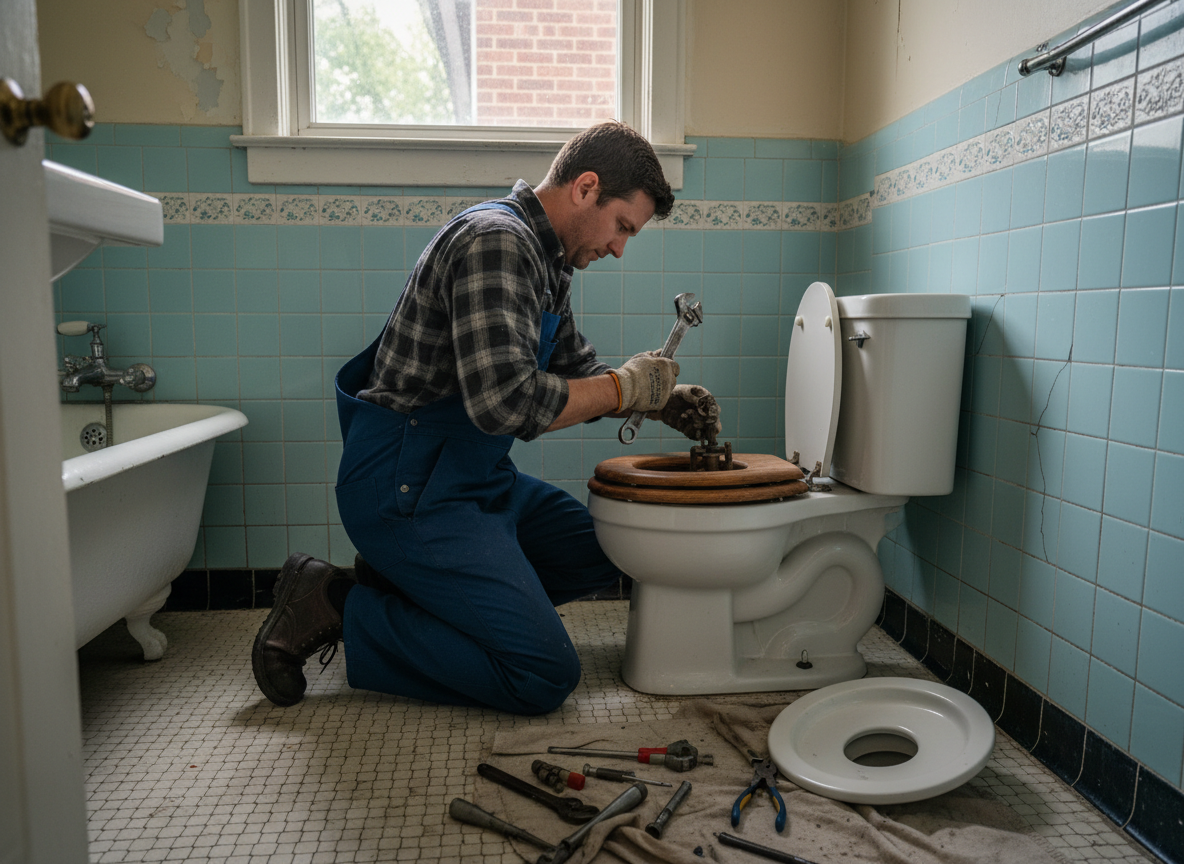
Many pre-1970 homes in Harwood Heights still use original toilet components that fail after 8-12 years of service. The most frequent fix involves swapping the flapper and adjusting the fill valve, which resolves the running water in under an hour for most cases.
Common Causes in Pre-1970 Housing Stock
Homes near Ridgeland Commons and Harwood Heights Village Hall were typically built with 3.5-gallon or larger tanks and rubber flappers that degrade from repeated chlorination and temperature swings. Harwood Heights sits in Cook County under a humid continental climate where cold winters pull metal parts through contraction cycles that loosen seals over time. Mineral scale from municipal water lines further coats the flush valve seat, preventing a tight closure. These conditions differ from newer construction because original brass or early plastic mechanisms lack modern self-cleaning features. Residents in nearby Norridge report similar patterns when winter temperatures drop and indoor heating dries out internal rubber parts faster than in milder seasons.
Step-by-Step Diagnosis and Repair
Begin by removing the tank lid and listening for the continuous hiss that indicates water escaping past the flapper. Shut off the supply valve, flush to empty the tank, and inspect the flapper for cracks or mineral crust. Clean the valve seat with a non-abrasive pad before installing a new 3-inch or 4-inch flapper sized to the existing opening. Next, check the fill valve by watching the water level; if it rises above the overflow tube, replace the entire unit with a fluidmaster-style model rated for 15-20 year service intervals. Reassemble, turn water back on, and verify the tank refills to the marked line without overflow. These steps address 70-80% of running toilet calls in older Harwood Heights properties without requiring full fixture replacement.
When Professional Help Becomes Necessary
Persistent running after flapper and fill valve replacement often points to a cracked overflow tube or warped tank-to-bowl gasket that requires tank removal. In such cases, homeowners benefit from scheduling toilet repair rather than attempting further disassembly. Plumbers also use leak detection equipment to confirm no hidden supply line seepage is contributing to the symptom. Properties in Harwood Heights with original cast-iron soil stacks sometimes develop related issues that only surface during a full inspection. For homes showing multiple slow leaks, connecting this repair to broader system checks prevents repeat visits during peak winter months.
Preventing Recurrence in Local Conditions
After the repair, lower the tank water level by 1 inch if the bowl still clears effectively; this reduces pressure on aging seals. Install a new supply line with braided stainless steel construction to eliminate rubber deterioration common in pre-1970 shutoff valves. During summer travel, shut the water at the angle stop to avoid unnoticed running that wastes 200-400 gallons monthly. Readers dealing with related copper pipe concerns may find value in replacing shower valves in homes with original copper piping. Regular seasonal checks before cold weather arrives keep older toilets functioning reliably through Cook County winters.