2026-08-19 · Mike Kowalski
Understanding Your Water Bill After a Possible Leak in Harwood Heights
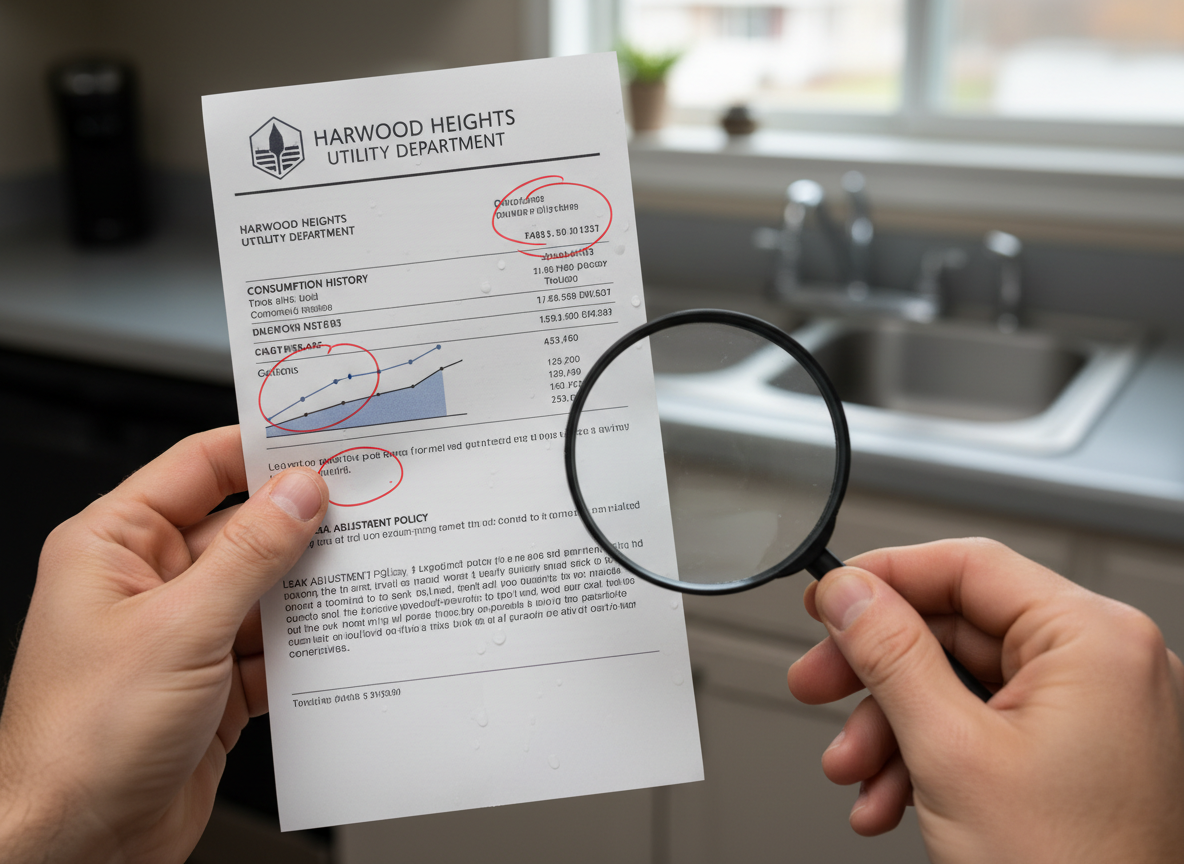
A sudden increase on your monthly water bill in Harwood Heights usually signals an undetected leak, and comparing the current reading to the same month last year often shows usage jumps of 20 percent or higher once the leak starts.
Spotting Leak Indicators on Your Bill
Harwood Heights homes built between the 1950s and 1970s commonly feature galvanized or cast-iron supply lines that corrode over decades. When these lines develop pinhole leaks, the extra water loss appears on the bill as higher consumption without any change in household habits. Cold winters in the local humid continental climate cause pipes to contract, widening small cracks and accelerating the volume lost. Residents near Ridgeland Commons or the Harwood Heights Village Hall often report the same pattern after the first hard freeze. Checking the bill for consecutive months of rising usage, rather than a single spike, helps separate seasonal irrigation from a true leak.
Local Factors Affecting Leaks in Cook County
Soil movement in the clay-heavy ground around Harwood Heights and Norridge stresses underground supply lines, especially where homes sit close to Chicago’s older water mains. Hot summers followed by rapid temperature drops create repeated expansion and contraction cycles that fatigue joints and fittings. Many properties in these neighborhoods still rely on original plumbing that has never been updated, so leaks frequently appear at slab penetrations or in crawl spaces. These conditions differ from newer Park Ridge subdivisions where copper or PEX lines reduce the same risk. Understanding the age of your home’s piping helps predict whether a bill increase stems from a small drip or a larger line failure.
Checking Your Meter to Confirm a Leak
Turn off all indoor and outdoor faucets, then watch the meter dial or digital display for any movement over a two-hour period. Even a slow sweep indicates water is escaping somewhere in the system. Note the exact reading before and after the test so you can calculate daily loss if the meter keeps turning. In Harwood Heights, meters are typically located near the front foundation or in a basement utility area, and many older homes still have the original analog dials that require manual reading. Documenting these numbers gives a clear record before contacting a plumbing contractor.
Next Steps After Confirming a Leak
Once the meter test shows movement, locate the main shutoff valve near the water heater or where the line enters the home. Shutting off water at this point stops further loss while you arrange inspection. Leak Detection services use acoustic equipment and pressure testing suited to the older pipe materials common here. If the issue traces to supply lines, targeted Pipe Repair can often restore flow without full repiping. Winter conditions in the Chicago suburbs make prompt attention important, since an active leak can worsen once temperatures drop again. See the related guide on Water Heater Maintenance Before Winter in the Chicago Suburbs for additional seasonal checks that often reveal hidden leaks at the same time.
When to Schedule Professional Help
If the meter continues to register flow after the main valve is closed, the leak lies between the meter and your shutoff and requires immediate excavation or camera inspection. Homes in Norridge sharing the same water main infrastructure sometimes experience simultaneous issues after heavy rain or freeze-thaw cycles. A licensed local team familiar with Cook County permitting can access the line, document the damage, and restore service without repeated street cuts. Keeping records of the bill increase and meter readings helps the technician isolate the problem faster on arrival.