2026-08-19 · Mike Kowalski
Water Heater Maintenance Before Winter in the Chicago Suburbs
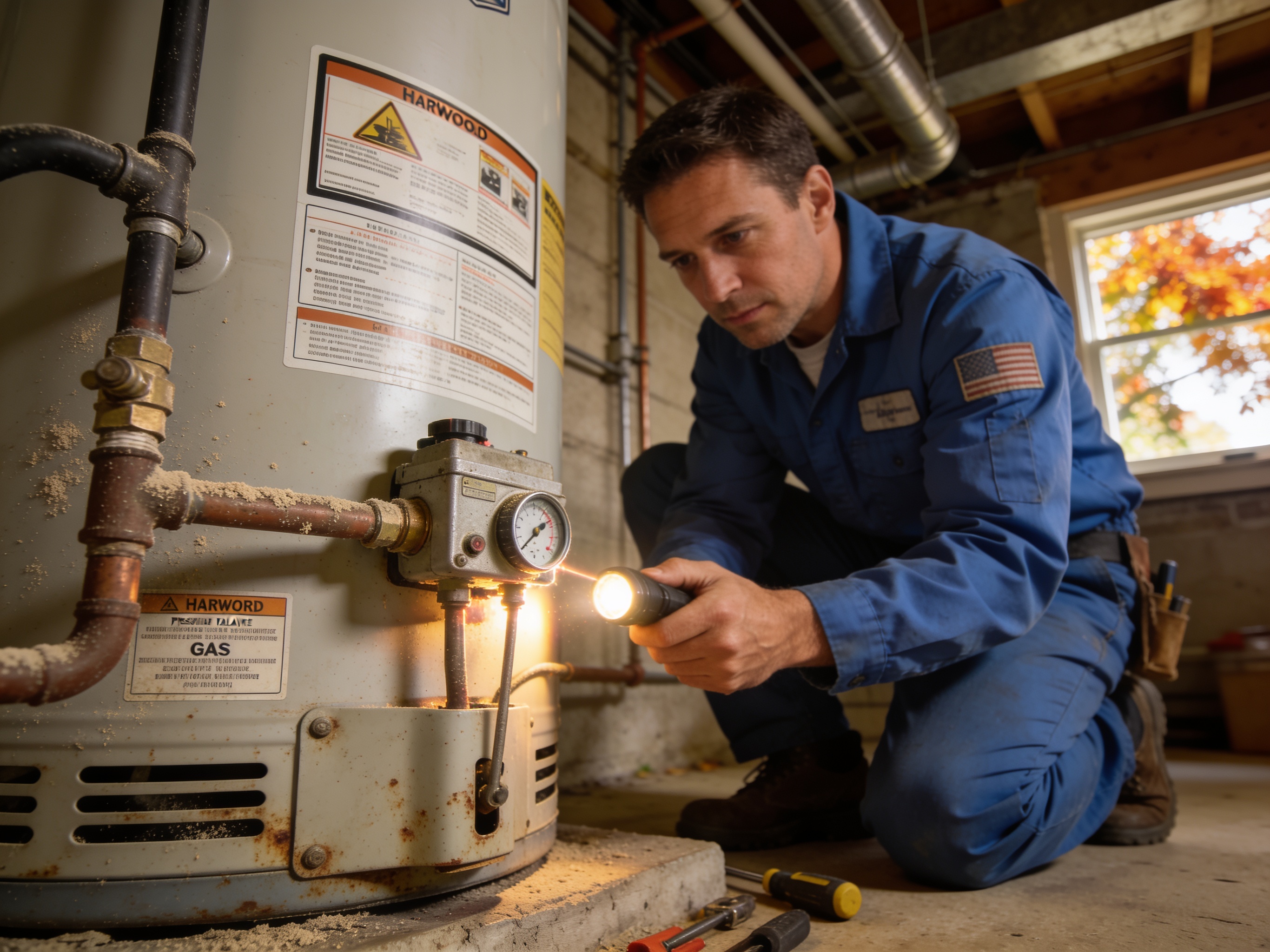
In Harwood Heights and nearby Norridge, schedule water heater maintenance in October or early November before temperatures drop below freezing. This timing prevents sediment buildup from accelerating corrosion during the humid continental winters common across Cook County, where pipes in 1950s-1970s ranch homes often run through unheated crawl spaces.
Inspecting Tank Condition in Local Housing Stock
Mid-century homes in Harwood Heights typically feature 40- to 50-gallon tanks installed in basements or utility closets near the Harwood Heights Village Hall area. Start by checking the exterior for rust streaks or moisture around the base, which signals anode rod depletion after 8-12 years. Lift the temperature-pressure relief valve lever briefly to confirm it releases water without sticking, a common failure point when sediment hardens during summer humidity. Note the manufacture date on the tank label and compare it against the 10-15 year average lifespan seen in Park Ridge and Chicago-adjacent properties where hard water accelerates wear. Document any hissing or rumbling sounds that indicate scale on heating elements, especially in homes built before 1970 with galvanized supply lines.
Flushing Sediment Before Cold Weather Hits
Perform an annual flush by connecting a garden hose to the drain valve and running water until it clears, removing the mineral deposits that settle faster in Cook County's water supply. In Harwood Heights lots with older concrete foundations, this step reduces the risk of overheating elements cracking during January freezes. Repeat every six months if your household uses more than 80 gallons daily. After flushing, refill slowly while bleeding air from nearby faucets to avoid pressure surges that stress joints in mid-century pipe runs. Homeowners near Ridgeland Commons often combine this with checking expansion tanks, which must hold 12-18 psi to handle thermal contraction in uninsulated attics.
Insulating Exposed Lines and Components
Wrap supply and return lines with 1/2-inch foam insulation in crawl spaces and garages common to Norridge and Harwood Heights ranches. This maintains incoming water at 50-55 degrees Fahrenheit even when outdoor lows reach single digits, cutting recovery time by 20-30 minutes after heavy use. Secure insulation with tape at every joint and cover the tank itself with an insulating blanket rated for electric or gas models. Focus on the first three feet of pipe exiting the tank, where heat loss is greatest in homes built on slab foundations. Avoid covering the thermostat or burner access panels to prevent safety issues during winter operation.
Knowing When Professional Service Is Required
If the tank shows leaks at the top or bottom fittings, or the pilot light fails to stay lit after three attempts, contact a plumber rather than attempting DIY fixes. In Harwood Heights, these signs often trace to corroded dip tubes or failing thermostats in units over 12 years old. Schedule service through Water Heater Repair before December to secure appointments during peak demand. For homes near Chicago borders, technicians can also inspect venting on gas models to ensure proper draft against high winds common in winter. Combine this visit with checks on related systems referenced in Protecting Outdoor Faucets From Freezing on Harwood Heights Lots to address whole-house freeze risks at once.
Planning Ongoing Care Through Spring
After winter, test the temperature setting stays at 120 degrees Fahrenheit to balance efficiency and scald protection. Track monthly energy use on your utility bill; a sudden 15-20 percent increase often points to sediment or failing elements needing attention before summer. Home Service Plumbing, based at 4338 North Newland, Harwood Heights, IL, 60706, maintains hours of Mon–Fri 8am–6pm and Sat 9am–2pm for follow-up visits. Keep records of each maintenance date and any parts replaced to spot patterns in your specific home's plumbing. This approach helps residents across Cook County extend equipment life without unexpected cold-weather interruptions.